
Jan 2024 Health Anxiety – The Guildford Psychologist

Health Anxiety and CBT

Psychologists are human. We make mistakes. I feel it best to get that out there before I explain what prompted me to write this blog post on health anxiety…..

This morning I attended a Driving Awareness course. Why? Well, in a bid to get home quicker and have dinner, I decided it would be fine to ignore a Road Closed sign and the various cones which a Fiat 500 could just-about fit between. Anyhow, just round the corner from said sign was a police car attending an incident. And a not-too-happy policeman. To make matters worse, I was the second person who had done it and the road was very narrow so turning round almost impossible. So I got a ticket, had to use a breathalyser for the first time in my life and learnt what it feels like to hear the words ‘anything you do say will be given in evidence’.  Needless to say my dinner went cold and at 7.45am today, a Sunday morning, I found myself on a course with a few other people who had not ‘driven with due care and attention’.Psychologist
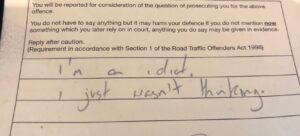
Now firstly, hands up, I should have paid attention to the Road Closed sign, as it did say ‘Police’ at the top, and was not just one of the those signs where you pass it in the hope that your turn-off will be before the roadworks….. So, a ticket was fair. I accepted it, and despite labelling myself an idiot for about 15 minutes, after a while I realised I should practice what I preach and tried to be more compassionate with myself.

The course this morning helped with this. I have to say it was interesting and reminded me of three biases that exist in the typical human mind:

Optimism Bias – This is where we overestimate the chance of experiencing a positive event and underestimate the chance of experiencing a negative event.

What’s worked bias – This is where if we’ve got away with something before, we think we’ll get away with it again

Self enhancement bias – Where we tend to enhance positive things and downplay negative things.

So, in my scenario, my ‘what’s worked bias’ meant my brain went “we’ve gone past many road closed signs before and nothing bad has occurred”. And my optimism bias meant I didn’t think anything bad would happen. Couple those two with an empty stomach and the thoughts of the meal my partner was making meant I did not process as fully as would have been ideal to the word ‘Police’ on the sign…..

So…. health anxiety. The thing is, we are mortal beings. We can get ill. Cancer exists. Indeed, half of us will have some form it in our lifetime. But, due to these three biases the majority of people do not focus on this fact and we just walk round believing on some level that it ‘won’t be me’. This is where someone with health anxiety is different. They often have a greater conscious awareness of the risk of health problems. This conscious awareness, and the rumination on it brings about something called ‘depressive realism’. It is important to recognise that many people with health anxiety are often not overestimating the chance of a health issue. No, that is not the problem. The problem is the amount of focus and engagement they spend on this information.

This morning I was told that in the UK, 70 people a day are seriously injured on the roads and 5 are killed. That’s over 25,000 seriously injured a year. I can safety say I have driven with optimism bias for many years. And this is the thing, because I have not focused on the dangers of the road, I’m not the slightest bit anxious when I drive. Should I focus on this, I’d imagine I’ll start driving very carefully, maybe even have a snack before I get into the car. Maybe be tentative at a roundabout. Maybe take public transport more. The problem is, if I do start to do all this, I’ll likely start to be more anxious about driving. This is what occurs with health anxiety. A person, often triggered by a reminder that we are mortal (someone close to them dying, a near miss, a diagnosis, an injury) will start to do more health driven behaviours (check all symptoms online, seek reassurance, check heart rate on apple watch, frequently check body in shower). This exacerbates the anxiety. Then, something called interpretation bias occurs and the person starts interpreting ambiguous symptoms negatively (Du et al, 2023).

A big part of cognitive behavioural therapy (CBT) for health anxiety is firstly helping a person understand what is happening that is keeping the problem going. Together, we then work on changing the reinforcing behaviours and the relationship we have with certain thoughts. From this we may start work on engaging more with thoughts that are meaningful and fulfilling and less with those that, whilst sometimes true, may not help us focus on the experience of our present living moment.

I just want to end this blog by explaining that everyone is different and peoples experiences of health anxiety can vary a lot. Therefore, whilst this blog explains a common pathway that can occur, I have to stress that it is not the pathway all with health anxiety will relate to. The aim of treatment, as with all psychological difficulties, is to understand you as an individual first. From there, help work with you to see what is maintaining your individual difficulties and the strategies that may work best for you to move forward.

As always, any questions, please do not hesitate to contact me.

Aug 2022 – Online Therapy

Online Therapy

During the pandemic a lot of us found that video calls became a core part of our working lives. The socialisation to video calls has meant that more and more people are now considering this as the medium in which they would like to receive therapy.

Positively, the research is there to show that online therapy has been shown to be at least as effective at treating both low mood and anxiety  as face to face therapy is (Luo et al (2020), Morriss et al , (2019)). This would make sense too. A big part of therapy is being able to feel comfortable in the therapy room; feeling as though the space is a safe place to talk, and what better place than the comfort of your own home. Furthermore, there a big convenience to having sessions online – less ‘getting ready’, no travel time, no waiting areas’ – meaning the session can take up less time in the day and more time to do other activities. For clients with OCD, I have found that online sessions with cognitive behavioural therapy (CBT) can be particularly helpful. Often compulsions occur in the home. Therefore, having sessions at home means we can work directly on the compulsions in the environment in which they occur. Personally, I have found this translates to a faster reduction in compulsions between sessions.

I can’t see face to face appointments disappearing though. It is how many visualise therapy to be. Indeed, even for clients wanting online therapy appointments, I sometimes get asked whether first 1-2 sessions could be face-to-face so that they can meet me in-person. This is certainly something I am happy to offer.

I continue to have a weekly face to face clinic, and although the demand for online sessions means the number of video appointments I offer is greater than it was in 2019, I think going forward they’re both here to stay.

If you have any questions regarding either online sessions or face to face appointments, as always, please do not hesitate to ask.


April 2020 (COVID-19) – Blog Post 4: Talking about COVID-19 with Children – The Guildford Psychologist

15.04.20

Once again, I really hope this period is not proving to be too difficult for you and your loved ones. This is the fourth blog of this series and is focused on how to talk about COVID-19 with children. My previous COVID-19 blogs titled ‘Managing Loneliness’, ‘Ways to maintain your Wellbeing’ and ‘Coping with uncertainty and other difficult thoughts and feelings’ can be found on the March 2020 blog posts: https://www.drbenjmead.co.uk/2020/03/. As always, any questions, please do not hesitate to contact me and I’ll be happy to help.

Stay safe,

Ben


Talking about CoVID-19 with Children

I’ve received a few queries surrounding how to discuss COVID-19 with children, so I thought I’d offer some tips. I should add that many of the tips in this blog are not mine, rather they come from one of the professional bodies I’m attached to – The British Psychological Society. I’ve added a few of my own, plus some links I think could be helpful too.


Tip 1: It is good to talk

Children will have heard about Coronavirus and likely noticed changes around them – such as people wearing face masks, not being allowed out, and (crucially!) not going to school. It is important they feel comfortable talking to you about Coronavirus. As their parent you’ll likely not only be the best source of information but also the best place for reassurance for them. It’s also likely they will talk to their friends or other children. This can lead to misinformation and imaginations going wild. So having the chance to check-in with you is especially helpful.


Tip 2. Be truthful but remember your child’s age

Take an honest and accurate approach – give them factual information, but adjust the amount and detail to fit their age. For example, you might say ‘we don’t yet have a vaccination for Coronavirus, but doctors are working very hard on it’ or ‘a lot of people might get sick, but normally it is like a cold or flu and they get better’. Younger children might understand a cartoon or picture better (there’s a great cartoon book that I found here: Coronavirus cartoon.

We also recommend that adults watch news programmes and then filter this information to their child in a developmentally-appropriate way.


Tip 3. Allow children to ask questions

It is natural that children will have questions, and likely worries, about Coronavirus. Giving them the space to ask these questions and have answers is a good way to alleviate anxiety. Again, try to be honest in your responses – it is ok to say you don’t know. At the moment, there are questions we don’t have answers to about Coronavirus: you can explain this to your child and add in information about what people are doing to try to answer these questions. Maybe your child has an idea too; let them tell you or draw it.


Tip 4. Give practical guidance

Remind your child of the most important things they can do to stay healthy, such as wash their hands regularly, and remember the ‘catch it, bin it, kill it’ advice for coughs and sneezes. Help your child practice and increase their motivation for keeping going – maybe thinking of a song they want to sing while washing their hands.


Tip 5. Recognise change can be overwhelming for some children

Humans typically like a sense of control. When we don’t get it, we can get stressed. Also, when lots of changes happen at the same time it can be overwhelming. This can be more so for children, particularly if they are not able to fully understand why the changes are occurring. It’s therefore helpful to normalise this. Discuss with your child that their body may feel nervous at the moment and this is okay; these are strange times. Just let them know that you are there for them if/when they wish to talk.


Tip 6. Worries about Coronavirus may manifest in other worries or in frustration

When we’re anxious about something, it’s common to get stressed about lots of things. I know when I’m struggling with something I often get a bit frustrated with the dishwasher, for example: I’m really not a fan of emptying it! The dishwasher hasn’t done anything to deserve this, it just acts as an object towards which I express my stress. The same can occur with children. It’s possible they may start to get more concerned about being alone at night, or worried about something that used to bother them in the past. This is understandable. Just listen, reassure and try to help relax them.

It’s worth adding here that stress can manifest in both anxiety and frustration, via the fight/flight response. Therefore, just like adults, when children are stressed about something it can lead to worries about lots of things, as well as frustration and anger: that adrenalin needs to go somewhere. Again, the same ideas apply. When they’ve calmed down, give them space to talk, or at least let them know you are there if they want to chat.


Tip 7. Try to manage your own worries

Finally, children can be quite good at picking up when we’re anxious, so talk to your children about Coronavirus when you feel calm. I wrote some tips in one of my blogs last month (https://www.drbenjmead.co.uk/2020/03/) that I hope will help you if/when you are feeling anxious or worried. It can be so easy to fall into traps of ‘What if (insert your fear about the future)’, particularly at this moment in time. Trying to manage these as best we can is all we can ask of ourselves.


I hope all of this helps. As always, just pick up the phone or send me an email if you have any questions.

March 2020 (COVID-19) – Blog Post 3: Managing Loneliness – The Guildford Psychologist

27.03.20

Once again, I hope this period is not proving to be too difficult for you and your loved ones. This is the third blog of this series and is focused on managing loneliness. My previous COVID-19 blogs titled ‘Ways to maintain your Wellbeing’ and ‘Coping with uncertainty and other difficult thoughts and feelings’ can be found below this post. As always, any questions, please do not hesitate to contact me and I’ll be happy to help.

Stay safe,

Ben

Managing Loneliness

Humans are social creatures. Back in caveman/woman times, without each other we’d struggle to survive. There was virtually no way that we’d be able to hunt, cook, fight, make a shelter and our clothes, all on our own. As a result, part of our brain is wired to seek out other people and seek social approval.

Thankfully, in today’s world, we have so much available to us (supermarkets, ovens, houses, online shopping) that it is relatively easy to survive on our own. However, whilst we can survive in the physical sense, it does not mean we will feel good mentally when on our own. This is because there is still that part of our brain that believes we need others to survive. This is why regulations surrounding staying indoors, social distancing and working from home can be tough. If you’re living on your own you may not be able to get the physical human contact that your mind craves. It is therefore natural that your brain is going to react with concern.

Loneliness is the feeling we get when we are not able to achieve the level of social interaction we desire. It can play a significant impact on our mental health and can unfortunately lead us to feel anxious and depressed. I therefore hope these tips help.


Tip 1: Think of alternative ways of making contact with others

If you’re unable to go out, try to think of other ways in which you can see people. Phoning, text, WhatsApp and FaceTime / video calls are great ways to stay in contact with friends and family. This can help remind you that there are people around. There are even some great mobile apps to help link up with friends in group video – Houseparty is one of these apps (www.houseparty.com).


Tip 2: Talk to people online

If you have a hobby/interest then there’s a high chance that there’s an online forum dedicated to the subject. This’ll enable you to chat to others with similar interests. Tapatalk (www.tapatalk.com) hosts thousands of different forums, where you can chat to others. Dating apps too, and online games can also be great ways to interact with others.


Tip 3: Just observe others

Just observing other people outside can be really helpful. So, if you can go out, take some time to do some people-watching. Or if you live near others, sit by your window and watch the world go by. Even waving to someone or saying hello to a neighbour through their window can help us feel a little less lonely.


Tip 4: Learn to spend time with you.

This period could be a great time to learn how to make the best of being with yourself and comfortable in your own company. For example, during this period could be a time to learn a new skill, read up on something you’ve always wanted to know more about. It could be cooking, yoga, writing a novel (or just a journal!), or just reading that book that you got for Christmas five years ago that always goes in the ‘I’ll read that after I’ve done (insert mundane task)’ pile.


Tip 5: Make plans for the future

We can learn a lot about ourselves in our own company. Some things we may like, some we may not. But recognising these gives us an avenue to make changes to improve, to set goals on how we may go about things differently in the future.


Tip 6: Got any pets?

Pets can be a great reliever of loneliness; spending some quality time with them can be a great way to reduce feelings of loneliness.


Tip 7: Just for older people….

If you’re one of the 8.5 million older people in this country then this period may hit you the hardest. The length of time you may be asked to self-isolate to keep yourself well could naturally have an effect on your mental health. Understandably, feelings of loneliness could appear. There are people out there though, and AgeUK (www.ageuk.org.uk), Independent Age (www.independantage.org) and The Silver Line (www.thesilverline.org.uk) all can provide further advice as well as their ever popular befriending services.


This is just a small list of tips that I thought were more applicable to the current difficult situation we’re in than a typical list (which, naturally, invariably involves meeting up with new people or old friends!).

If loneliness is an ongoing problem for you, there are lots of places out there that can help. There are charities that specialise in helping with loneliness. One of which is Campaign to End Loneliness (https://www.campaigntoendloneliness.org/). On this website you can find links to all sorts of places, including other befriending services and volunteering opportunities. Indeed, once normality returns and we do not need to stay indoors then there are many websites around which can help us meet new, likeminded people – Meetup (www.meetup.com) is a great (non-dating!) site where you can meet new people in your area.

Finally, I just wanted to add that if loneliness has been a long-standing problem for you, then it’s important to recognise the value of small steps to help overcome it. For example, if the idea of volunteering is daunting, then just set your first goal to write the email to enquire, or just have a short phone call. If attending a yoga class is something that interests you but feels overwhelming, then perhaps ring the organiser and ask if you can just watch for a session. I also help many people for whom loneliness is a result of shyness/social anxiety; working on the latter can be a really helpful way of helping with the former, so just ask if you’d like help here. It’s such a common difficulty and I’d be more than happy to help.


March 2020 (COVID-19) – Blog Post 2: Coping with Uncertainty and other difficult thoughts and feelings – The Guildford Psychologist

24.3.20 Once again, I just want to say I hope you and you loved ones are well at this difficult time. This is my second blog on tips I hope you will find helpful. The first blog titled ‘Tips to maintain your wellbeing’ can be found below this one.

Today’s blog is on coping with difficult thoughts and feelings that may naturally come up at this time. I wanted to write something a bit different from the standard basic tips I was seeing on the internet. However, because of this, some of what is written in this post may take a bit of time to get your head around. Therefore, if you have any questions or want me to clarify anything please do feel free to email or phone me. I’d be more than happy to talk through it with you.

Stay safe,

Ben

Coping with Uncertainty and other difficult thoughts and feelings

Firstly, I really want to stress that at these difficult times it is completely normal to be feeling anxious. We are in an environment that most of us are not used to and our brains are having to negotiate through it with a lot of uncertainty.

The brain, naturally, is not a fan of uncertainty. Uncertainty in the past (caveman/woman times) often meant ‘danger’ (more chance of being attacked/eaten). Part of our brain has not evolved since these times. Therefore, when there’s a lot of uncertainty, our brain will naturally try to think ways to get more certainty so it feels safe. Unfortunately, achieving certainty is not always possible, so the brain just stuck on the loop of trying and this can lead to worry++ and be very tiring. So here’s some tips:


Tip 1: Recognise what you can control, and what you can’t control and try to focus more on the former.

Make a list of the things you can control and the things you can’t and try to focus on the former. Examples of each might be:

Things we can’t control:

  • How long this virus situation will last for
  • How others react in this scenario
  • Whether others follow social distancing rules
  • The amount of pasta left on the shelves….

Things we CAN control:

  • What you do with your hands, feet and mouth right now
  • Your positive attitude
  • Trying to find fun things to do at home
  • Your own decision whether to socially distance
  • Whether you try to be kind and thoughtful
  • If you go on social media, listen to the news
  • Whether we try to be the best human we’d like to be at this moment


Tip 2a: Understand the difference between our ‘thinking-self’ and our ‘observing-self’

As I say, when we’re anxious, or dealing with uncertainty, we often have similar thoughts going round and round our head. For example, ‘What if I/(other person) gets COVID-19’ or ‘How do I make 100% certain others follow social distancing rules?’. We can recognise that we can’t achieve certainty, but sometimes our brain still stays stuck on the topic and this can be draining.

One answer may be to stop these thoughts. However, unfortunately, we don’t have a lot of control over our thoughts. For example, try not to think of a pink elephant for thirty seconds…… it’s tricky! Trying to stop a thought rarely works and nor does distraction. If distraction does work, generally it’s not for much time, particularly if it’s about something we’re very worried about.

Since controlling or stopping these thoughts invariably gets us nowhere, the trick is to do the opposite. This involves being more accepting of these thoughts.

So how do we accept our thoughts? Firstly, by accepting our thoughts, I don’t mean we agree with them. I simply mean that we accept that they exist, that they’re there in our head. It can also be helpful to recognise the difference between our thinking self and our observing self, and this exercise can help with that:

For the next thirty seconds, just pause for a moment and notice what you mind is thinking. Perhaps your mind is naming the objects around you. Maybe it’s thinking ‘I’ve got no thoughts’. Perhaps it’s even generated an image in your mind. If no thoughts appear, just keep listening until they restart. And that’s it. You’ve recognised the part of your mind that talks – the thinking self – and the part of your mind that listens – the observing self.


Tip 2b: Use your observing-self to help you accept your thoughts/thinking-self

Now, to accept a thought, we want to use our observing self. With our observing self we want to observe the thought/thinking-self non-judgmentally. I often suggest to clients to think of a name for their thinking self, like ‘Bob’ or ‘Goober’ (if it makes you smile, all the better!).

So, if you notice that your ‘Bob’ is thinking in a loop (aka worrying), try using the following techniques to help adopt an acceptance approach to the thoughts, and help you focus more on the things you can control:

  • politely thanking ‘Bob’ for the alert then move on with our day.
  • politely inform Bob that we know it’s worried and that’s just a sign we care, but we can’t control this problem
  • put Bob’s thoughts on a cloud and watch them drift by, and when they come back just put them on another cloud – accepting the clouds/thoughts in the sky
  • putting the thoughts on a leaf and imagine them floating down a river (there’s a great youtube video that can help you practice this): https://www.youtube.com/watch?v=r1C8hwj5LXw
  • thinking about the BBC News Channel, with the ticker tape going along the bottom with all the headlines – imagine your thoughts scrolling on that ticker tape, just round and round – but notice how you can still observe the newsreader if you wish.

As well as accepting your uncertainty thoughts, it can be helpful to try to accept your uncertainty feelings too. This takes practice, but, as with the thoughts, the idea is to be able to step back and observe these feelings inside. Accept that, at this time, it’s completely understandable to feel this way. Then, with the time you’d use to typically fight/stop these feelings, try to be the best version of you that you can be (see Tip 3), even if means the emotions are still there. Russ Harris is world-renowned for his literature on acceptance, and he’s done a great video on ‘the struggle switch’ which explains the idea of accepting our emotions: https://www.youtube.com/watch?v=rCp1l16GCXI


Tip 3: Work out what matters and try to focus on being the best version of you that you want to be.

When we don’t spend so long trying to stop / distract ourselves from our thoughts, we often find we have more free time. With this time, focus on being the best version of you that you can be. To work out what the ‘best you’ is, it can be really helpful to think about what values you’d like to live by.  This can be tricky and does take a little bit of thought. One way to work out the values that matter to you can be to ask yourself the following two questions:

  • Imagine it’s your (insert your age + 2 years) birthday. You’re having a party and your family and friends are there. Invariably you come up in conversation (!). How, would you like your friends/family to be describing you / your personality amongst themselves?
  • Think of some people you really admire. These may be people you know personally, maybe film stars/celebrities, maybe even a cartoon character. What is it about them that you admire? What qualities do they have?

If after thinking through these questions you struggle to come up with some values, that’s okay. Hopefully this list of values may help: https://www.actmindfully.com.au/wp-content/uploads/2019/07/Values_Checklist_-_Russ_Harris.pdf. The list has a task attached to it, specifically for the purpose of helping you to work out what values matter most to you.


Tip 4: Set some goals around these values

Now that you’ve an idea on some key values you’d like to live by, set yourself some clear, realistic goals on how you could live in accordance with them. For example, let’s say one of the values you choose is ‘Caring’. You may set a goal to make a loved one a cup of coffee in the morning. Another may be to give a relative a ring to check out how they are.


Since how we behave invariably impacts our thoughts and our feelings, behaving in a way that is congruent with the person we’d like to be often makes us feel content in ourselves.


I hope you found this helpful. If you did, it may be worth checking out Russ Harris’s booklet on COVID-19 for more detailed tips! Russ is a well known practitioner in the world of Acceptance of Commitment Therapy (ACT) and he’s written lots of helpful books on the treatment.

His COVID-19 handout can be found on: https://coronadosafe.org/blog/face-covid/#.XnkDNYj7RPY


As always, any questions, please do not hesitate to contact me.

March 2020 (COVID-19) – Blog Post 1: Tips to Maintain your Wellbeing – The Guildford Psychologist

Firstly, I just want to say I hope you and you loved ones are well at this difficult time. Over the last week, I’ve been trying to think of things I can post on this site that I hope will help others manage this tricky time.

Speaking to clients and colleagues there seems to be some common questions that people have, and I’ll try to cover the main questions in individual blog posts. The first blog (below) will focus on ways to maintain our wellbeing. Over the next few days though, I’ll write further posts on ways of coping with difficult thoughts and feelings that may naturally come up at this time, and I’ll also do a special section on managing loneliness.

As always please do not hesitate to contact me should you have any questions.

Stay safe,

Ben


Tips to Maintain Your Wellbeing

I don’t think anything I put in this initial blog post will be rocket science – but, I hope, because of that, the ideas may be easier to implement! These ideas are not going to stop the threat of the Coronavirus, but I hope they help you manage your wellbeing during this tricky period. However, these are just some ideas….do feel free to email me if you have any more and I’ll add them.

Tip 1: Try to ensure you get enough sleep

When the brain has a lot of uncertainty fizzing about, it may be that you find it difficult to sleep. On a previous blog (https://www.drbenjmead.co.uk/2015/08/) I wrote some tips that I hope will help.

Tip 2: Try to eat healthily

Getting the right nutrients inside us can be really good for our mental health – it gives the brain energy and helps us think more clearly. For information on what is a good balanced diet, the NHS has a really helpful page: https://www.nhs.uk/live-well/eat-well/the-eatwell-guide/

Tip 3: Try to get enough exercise

Try to move your body each day, even if you have to stay indoors, as exercise is good for mood and stress levels. If you have a garden, use it! Hopefully it’ll warm up in the coming weeks making the garden a lovely place to be and get exercise. If you don’t have a garden, exercising indoors can be a good way to get fit. Perhaps try some of the Yoga videos on youtube. For the kids, Joe Wicks is going to be doing live PE sessions every Monday to Friday on his youtube channel at 9am – https://www.youtube.com/channel/UCAxW1XT0iEJo0TYlRfn6rYQ (he also has some great exercises for adults too….)

Tip 4: Practise Mindfulness…

Some of you may have heard of ‘Mindfulness’. Some of you may even have heard of Headspace, which is a great app to help practise mindfulness. Generously, the people at Headspace have kindly chosen to give additional free access to some of their mindfulness tracks: https://www.headspace.com/covid-19. Mindfulness can be a great way to help us observe ourselves and not get caught up into thought processes about things we have little control over (more on this on a future blog!), so if you’ve some free time now, this could be a great time to learn to help the present you, and your future you.

Tip 5: Connect with others

Whilst we may not be able to meet up so easily, in today’s world we have so much technology at our disposal. Facetime, WhatsApp video, Zoom – all great ways to chat to friends and family online! I love Zoom – mainly because it has a cool little Whiteboard function that lets you draw things to each other (game of noughts and crosses?). There’s also online gaming with friends. Or just the good old fashioned telephone, or chats over the garden fence…..

Tip 6: Go outside for a walk

Getting in your car and choosing a non crowded area to walk when you know there are few people around can be brilliant for one’s mental health. The fresh air and noticing the wildlife around can also help us be more mindful.

Tip 7: Take some time away from the news and social media

Keeping up to date with current is, of course, important. But, how helpful is it for that BBC live feed to be on in the background all the time? Having time away from the topic of Coronavirus will give our head some space to think of other things and recognise that life is greater than Coronavirus. Turn off those notifications for a few hours, turn off that Live News feed, and recognise the other things that are currently important to you.

August 2019 – Common Questions – The Guildford Psychologist

During my 10 years in private practice there have been common questions I’m often asked. I thought it may be helpful sharing some of these. I’m sure there’s lots I’ve missed, so please do not hesitate to contact me if you have any queries.


What’s the process to see you?

After contacting me I’ll immediately let you know if I have a waiting list. If I do, I’ll let you know how long it is likely to be before I could offer you weekly appointments. Sometimes this may be a few weeks, sometimes, unfortunately, a couple of months. Whichever it is, if I have a wait time, I’ll always try to ensure I offer you cancellation appointments in the interim.

If the wait time is okay for you, I’ll then suggest we speak on the phone. This is just to see if you have a difficulty I feel I can help with. I do this, as the last thing I want is for you to make the effort to come to see me only for me to say I’m not the most appropriate practitioner. However, you do not have to have this call if you do not wish. It’s just there if you wish to have it.

If I feel I can help, I’ll then let you know when an appointment (cancellation or weekly) comes available. If you plan to fund through health insurance, I’ll also need a few pieces of information just to confirm treatment with your insurers.


How long is the wait for an appointment?

Unfortunately, my clinic is often full. Therefore, it’s common for there to be a bit of a wait for a weekly appointment. However, prior to a weekly appointment I’ll always try to offer you a couple of appointments that are available due to cancellations. These appointments are generally used to complete an assessment and they also give you a chance to work out if you feel we can work together – without having to wait until a weekly slot comes available to find out. Don’t get me wrong though, in an ideal world, I would be offering everyone weekly appointments from the first week they contact me. I can only apologise if I’m not able to offer this.


How many sessions will I need?

This question is easier for me to answer as the treatment progresses. It is a really common question that I’m asked over the phone or on email. I can completely understand this as it’s natural to want to have an idea on how much of your time may be required, and also your money (!). Unfortunately, the best I’m likely to say over phone or email is 4 – 20 sessions. I know this is often an unhelpful answer, but it is so difficult to ascertain how many sessions could be beneficial from a quick phone call or a brief email description.


I have health insurance, how do I ensure they fund the sessions?

The best thing to do is to speak to them. The most common process with insurers is that they’ll want to see a report from a medical practitioner (a GP / Psychiatrist) that states your need for treatment. Once they have this, they’ll hopefully give you an authorisation number for psychology treatment. We’d then be good to start.


I don’t really know what my thoughts are, I just feel so anxious / low / angry

This is a really common question.  Many people I meet struggle to identify thoughts, and sometimes a client may be really concerned by this. If this is you, you needn’t be concerned. It’s a really common concern. Indeed, Soucy et al (2019), recently identified it of the most common questions asked. We’ll work together on this, and sometimes we may even find that it is not even important to know what the thoughts are.


I’ve had CBT before and it didn’t help – how will you be able to help me?

As much as I wish it did, CBT does not work for everyone. However, CBT had developed so much in the past 20 years. There are now different variations of CBT, each with a great evidence base. For example, there’s Acceptance and Commitment Therapy, Compassion Focused Therapy and Mindfulness-based CBT – all of which I can offer. All fall under the CBT umbrella but are also distinctly different. If you’ve had one type of CBT, it’s possible that another type may be more helpful. We can certainly spend time discussing this. Indeed, whenever I see anyone, I’m trying to think what type of therapy (or what type of CBT) could be most helpful to this person. Although I always aim to, I’d be lying if I said I always get this right. Sometimes we may start with one therapy and then realise it’s not quite achieving what we want so we’ll discuss whether to move to another. If I do not offer the therapy I feel would be the most helpful, I’ll help you to find a practitioner who does.


Do you see children?

I see both adults and children.


Do you work with people who are suicidal?

I’m afraid not. There are a couple of reasons for this. The first is that I’m part-time, and I feel I may not be able to offer the level of support that may be most beneficial. The second is that active suicidal behaviour is not something I’m particularly experienced in. I do know a few practitioners who are though, so do feel free to contact, even if it’s just to ask who I would recommend. Sometimes I recommend the NHS in these situations, simply because, when someone is highly suicidal, you’ll be able to receive support from teams specilised in this area. Those teams have lots of different practitioners (psychologists, psychiatrists, nurses). This can mean the level of support given can far outweigh what a private practitioner may be able to offer, and the support systems will be regularly able to meet to ensure the needs of the person at risk are met.


Will I need to attend regularly?

Therapy is generally considered to be so much more effective when attended regularly. In cognitive behavioural therapy, often a lot of information is learnt and getting into a ‘flow’ can be really helpful. Having a session once a month or every now and then can make things tricky. It’s a bit like physiotherapy exercises – if you do them once in a while they are often not that helpful, but if you’re regular with your exercises then progress can quickly occur.


Do you offer online sessions?

I do. Online sessions are not what people traditionally think of when they think of therapy. However, with advances in technology they can now be an incredibly helpful and convenient way to receive help.


August 2018 – General Anxiety – The Guildford Psychologist

It is common for me to receive a phone call from someone asking for help with anxiety. However, anxiety difficulties span a number of areas. These include: general anxiety, panic disorder, obsessive compulsive disorder, social anxiety and health anxiety. All of these come under the “anxiety disorders” bracket according to medical classifications.

The former of these – general anxiety – is otherwise known as ‘Generalised Anxiety Disorder (GAD). Broadly speaking, this is when someone experiences anxiety a lot of the time, about many different things. Positively, there is a wealth of research showing how cognitive behavioural therapy (CBT) can help.

There are two parts to CBT – an assessment part and a treatment part. During the assessment phase my aim is to understand the factors that have caused, and are maintaining a person’s anxiety. In this blog I would like to touch on research that has helped identify what behaviours typically maintain GAD.

Behaviours

It has been suggested for some time that unhelpful behaviours contribute to the maintenance of GAD. This year, research by Alison Mahoney and her colleagues has helped suggest what these behaviours commonly are. Their research also suggests that although there is overlap between the behaviours in GAD and depression, there are distinct differences.

In their research, they suggest that the maintaining behaviours in GAD fall into two brackets. These are ‘Safety Behaviours’ and ‘Avoidance’. ‘Safety Behaviours’ can be defined as behaviours that we do to keep ourselves safe from a perceived danger, but inadvertently maintain our anxiety in the long-term. Their research found that the most common safety behaviours were ‘keeping a close watch for anything bad that could happen’ and ‘checking to make sure nothing bad has happened or that everything is okay’. They also found the most common avoidance behaviours were ‘avoiding situations or people that worry me’ and ‘avoiding saying or doing things that worry me’. During our assessment, I’ll try and investigate what these ‘situations’, ‘things’ or ‘people’ are for the person opposite me.

Thoughts

If you are someone who is experiencing anxiety, then identifying the behaviours that maintain your anxiety can also help us understand what thoughts are maintaining the problem. To help with this, I’d be curious about the thoughts that are causing you to keep close watch or avoiding. Sometimes it could be a fear of something bad happening to someone. Sometimes it could be a fear of letting someone down, or being rejected. Other times it could be a lack of confidence in being able to problem solve – so wanting to ensure no problems occur in the first place. And sometimes, the reasons are not clear and it is just a ‘feeling’ that something bad may occur. Whatever the reason, my aim is to work with you to help you move forward.

As always, if you have any questions about this blog, please do not hesitate to contact me.

July 2017 – Grief and Bereavement – The Guildford Psychologist

Sometimes, after the death of a loved one, it can be a real struggle to adapt to life without them. On the one hand we can recognise that we need to build a different (or new) life. On the other hand we don’t want to let go of life as it previously was.

However, over time we invariably begin to realise that we need to choose a new life. This can sometimes be a very difficult decision. It’s not uncommon to feel that building a new life means forgetting the loved one or ‘getting over’ the loved one. It can feel that we would be betraying them. Often we can recognise that this is not the case, but sometimes this can be difficult for someone and therapy can invariably help here. The aim of the therapy is to learn how to incorporate  the memories and experiences we have of a loved one into our present life, rather than learn how to forget them.

In cognitive behavioural therapy (CBT), we recognise that our thoughts and behaviour play a key role in forming the new path.

Thoughts

Recent research has suggested that frequent worrisome thoughts about the future can impact the adjustment process (Eisma et al 2017). This makes sense given the amount of research that has shown that that thoughts that bring about a sense of hope can be really valuable at this time. However, it is easy to get caught up in worrisome thoughts. It is common for people to think that the pain will not ease, that they will not find a renewed sense of purpose in life, their loved one will be forgotten and that they will not be happy again. The aim of CBT is to help others recognise that this need not be the case. Knowing others have gone on to find happiness again can form the basis of this hope, and letting yourself know these things are possible is a start.

Behaviours

Involving ourselves in life without our loved one is also important for the adjustment process. This can be difficult, but thinking of activities to engage with as part of our new life is a step. One of the unhelpful cycles we can get into is to spend a lot of time indoors thinking about our loved one. It can be important to give ourselves time for this. However, it’s equally it’s important for us to show ourselves that life is continuing and we can continue. Therefore, engaging in some activities can be really valuable too and help us begin a different life. These activities can be things you’ve done before, or can be new interests. They can be anything from going for a coffee with a friend or doing an activity never previously considered. It may feel difficult to start something new, and indeed continue with old activities. This is where others may be of help  – perhaps  go with someone else first of all, or just go for a very short time.

During the initial grieving period, there will be times that things feel easier and times that will feel harder. At times you may feel like progress is slow. But, over time things will hopefully feel a little easier as we naturally adjust to our new life….. without forgetting our old one.

As always, please feel free to ask me any questions. I will be more than happy to help.


June 2016 – Health anxiety – The Guildford Psychologist

It is quite common for me to be asked to help someone who has excessive anxiety about their present or future physical health. This anxiety can be very distressing can cause someone to regularly have multiple tests to ensure there are no major problems. Each time a test comes back negative a person will feel relieved. However, a few months later the question may return and the doubt sets in. After all, what if something has happened in the preceding months? The cycle then repeats.

Physical and Mental Health Anxiety

Slightly less common and less researched though is when someone has excessive fear and anxiety about their future mental health. Commonly, it is put in the bracket of health anxiety but often studies on health anxiety will focus on those with physical health anxieties. It was therefore interesting to read the other day an article written by Gelinas and Hadjistavropoulos. In the article they gave preliminary evidence that cognitive behavioural techniques for physical health anxiety be efficiently adapted for mental health anxiety.

Intrusive and Unwanted Thoughts

An example of an excessive fear and anxiety about a future mental health problem may be someone who fears that they will ‘become a serial killer’. This is despite having no desire to be one, and exhibiting no behaviours to indicate that they put others at risk. They may though be experiencing intrusive thoughts or images of hurting others in some way.

Interpreting these thoughts and images as a ‘symptom’ of being a future risk then heightens the anxiety. Often these cognitions will then lead someone to perform what we call ‘safety behaviours’. These behaviours make a person think they have ‘saved’ themselves from doing something bad, but have actually just perpetuated the fear. A good example here may be that the “serial killer” may avoid using knives when others are at home. This action lowers the chance that they will attack their loved ones with a knife. However, seeing oneself avoiding knives will then promote doubt in the person’s mind. Why avoid the knives if you are no danger to others?

If someone has a fear like this, I often show them a piece of research by Purdon and Clark. In this study, they asked 293 people (none of who had been diagnosed with a mental health problem) to indicate whether or not they had experienced a particular thought. The results, to many clients, are often surprising. For example, did you know that 34% of men (17% of woman) have a thought of fatally pushing a stranger? Or that 48% of men (18% of woman) have thoughts of hurting a stranger? It’s not just predominantly men either. The study showed that 55% of woman (52% of men) have thoughts of swerving into traffic. Finally, 47% of woman (43% of men) have thoughts of causing a public scene.

Tolerating Uncertainty

However, as with many things in life, there is always a chance, however small, that a negative prediction will become reality. Therefore, generally it is impossible for a therapist to give a 100% guarantee that a negative prediction will not occur. Therefore, much of CBT treatment for health anxiety involves building resources to tolerate uncertainty. Some of this involves helping a person reduce the behaviours that often relieve their anxiety in the short term but perpetuate it in the long term. Examples include: looking for reassurance from family/friends/doctors; checking the internet for what a symptom could mean (I’ve seen some very very inaccurate things written on some sites!); avoiding particular activities to reduce chance that a bad thing will occur (e.g., knives example above); and frequently monitoring and checking current symptoms. For many, this is not easy. So we work on building up resilience to do this.

Treatment also involves exploring a person’s thoughts and testing out particular beliefs that could be maintaining the anxiety. Sometimes I also use an Acceptance and Commitment Therapy approach, exploring a person’s values and helping them to dedicate more resources towards living by these rather than focusing on unwanted thoughts or images. Throughout treatment though, I’ll aim to work with the client and together we’ll work out the best way forward for them.

Please do get in contact if you have any questions about the information I’ve written here, whether it’s just for more information, or if you feel you may be struggling with one of the difficulties discussed. I’d be happy to talk to you.